


Where Are Industrial Electric Motors Used? Full Industrial Application Breakdown
Industrial facilities rely on electric motors wherever motion, pressure, flow, positioning, or torque is required. From a small dosing pump in a water treatment plant to a large compressor in a refinery, motors convert electrical energy into mechanical work that keeps production moving.
Because industrial environments vary so widely, there is no single “best” motor for every job. The right choice depends on load type, duty cycle, speed control needs, environment, efficiency goals, and applicable standards. Understanding the most common industrial electric motors applications helps engineers, maintenance teams, and buyers choose equipment that is reliable, efficient, and suited to the real operating conditions on site.
Why Electric Motors Are Central to Industry
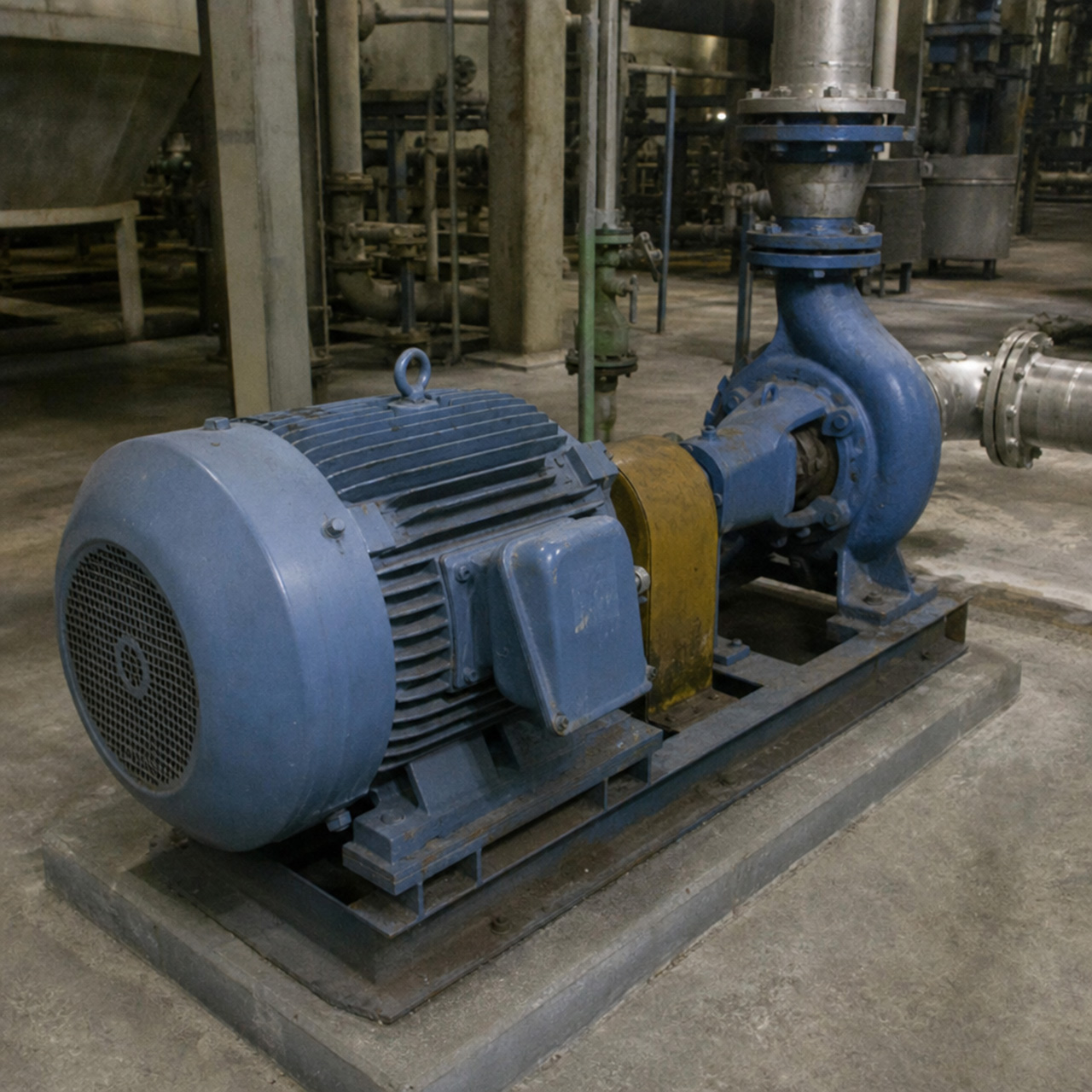
Electric motors are used because they provide controllable, repeatable mechanical power with relatively low maintenance compared with many combustion-based systems. In industrial settings, they are often connected to equipment that must run for long periods, start and stop frequently, operate under heavy loads, or deliver precise movement.
Common reasons electric motors are preferred include:
- They are available in many sizes, speeds, and torque ratings.
- They can be paired with variable frequency drives for speed control.
- They support automation and process consistency.
- They are suitable for both continuous-duty and intermittent-duty applications.
- They can be specified for harsh environments such as dust, moisture, washdown areas, or hazardous locations.
For this reason, electric motors for industrial applications are found across nearly every major sector, including manufacturing, energy, mining, food processing, HVAC, water treatment, and logistics.
Major Industrial Sectors That Use Electric Motors
Manufacturing and Production
Manufacturing plants use electric motors throughout their production lines. Motors power conveyors, mixers, extruders, presses, machine tools, packaging systems, robotic equipment, and material handling devices.
For example, an automotive parts plant may use AC induction motors to run conveyors, servo motors for robotic positioning, and hydraulic pump motors for presses. A plastics facility may use high-torque motors for extruders, cooling fan motors for process temperature control, and precision drives for cutting or winding systems.
In these settings, uptime is critical. A single motor failure can interrupt the entire production sequence, which is why high-quality electric motors for industrial applications are often selected based on durability, availability of replacement parts, and compatibility with automation systems.
Oil, Gas, and Petrochemical Facilities
Refineries, chemical plants, and oil and gas operations use motors to drive pumps, compressors, blowers, cooling towers, mixers, and process equipment. Many of these applications involve demanding conditions, including high temperatures, corrosive atmospheres, flammable materials, and continuous operation.
Motor selection in this sector often requires special attention to enclosure type, hazardous area classification, insulation system, bearing design, and starting method. Large synchronous motors may be used for high-power compressors, while rugged induction motors are common for pumps and fans.
Water and Wastewater Treatment
Electric motors are essential in water treatment plants, wastewater facilities, desalination systems, and pumping stations. They power raw water pumps, lift station pumps, aeration blowers, sludge mixers, chemical dosing systems, and filtration equipment.
A wastewater plant, for instance, may use motors to run aerators continuously, while pump motors cycle based on tank levels or flow demand. Efficiency matters here because many motors operate for long hours. Pairing the correct motor with the correct pump and drive system can reduce energy waste and improve process reliability.
Mining, Aggregates, and Cement
Mining and heavy material processing require motors that can handle shock loads, dust, vibration, and heavy starting torque. Applications include crushers, grinders, ball mills, conveyors, hoists, slurry pumps, screens, and ventilation fans.
In a quarry, electric motors may drive long conveyor belts loaded with rock, while a cement plant may use large motors for kilns, mills, and fans. These environments often demand robust construction, effective sealing, strong bearings, and proper thermal management.
Food and Beverage Processing
Food and beverage facilities use electric motors for mixers, grinders, pumps, bottling lines, packaging machines, conveyors, refrigeration compressors, and washdown equipment. Hygiene and corrosion resistance are major concerns.
Motors in these environments may require stainless steel housings, washdown-rated enclosures, smooth surfaces, or designs that reduce contamination risk. Servo and stepper motors may also be used for accurate filling, labeling, indexing, and packaging operations.
HVAC, Refrigeration, and Building Systems
Industrial and commercial HVAC systems use motors in fans, blowers, chillers, cooling towers, pumps, and air handling units. These loads are often ideal candidates for variable speed control because flow and pressure requirements change throughout the day.
For example, a variable frequency drive can slow a fan motor when full airflow is not required, helping reduce energy consumption while maintaining process or building comfort requirements.
Warehousing, Logistics, and Material Handling
Distribution centers and warehouses depend on motorized systems to move products quickly and accurately. Motors drive belt conveyors, roller conveyors, sorters, lifts, palletizers, automated storage systems, and robotic equipment.
In these applications, motors may start and stop frequently, operate at different speeds, or require precise positioning. Gearmotors, servo motors, and brushless motors are commonly used depending on load, speed, and control requirements.
Common Motor Types Used in Industrial Applications
AC Induction Motors
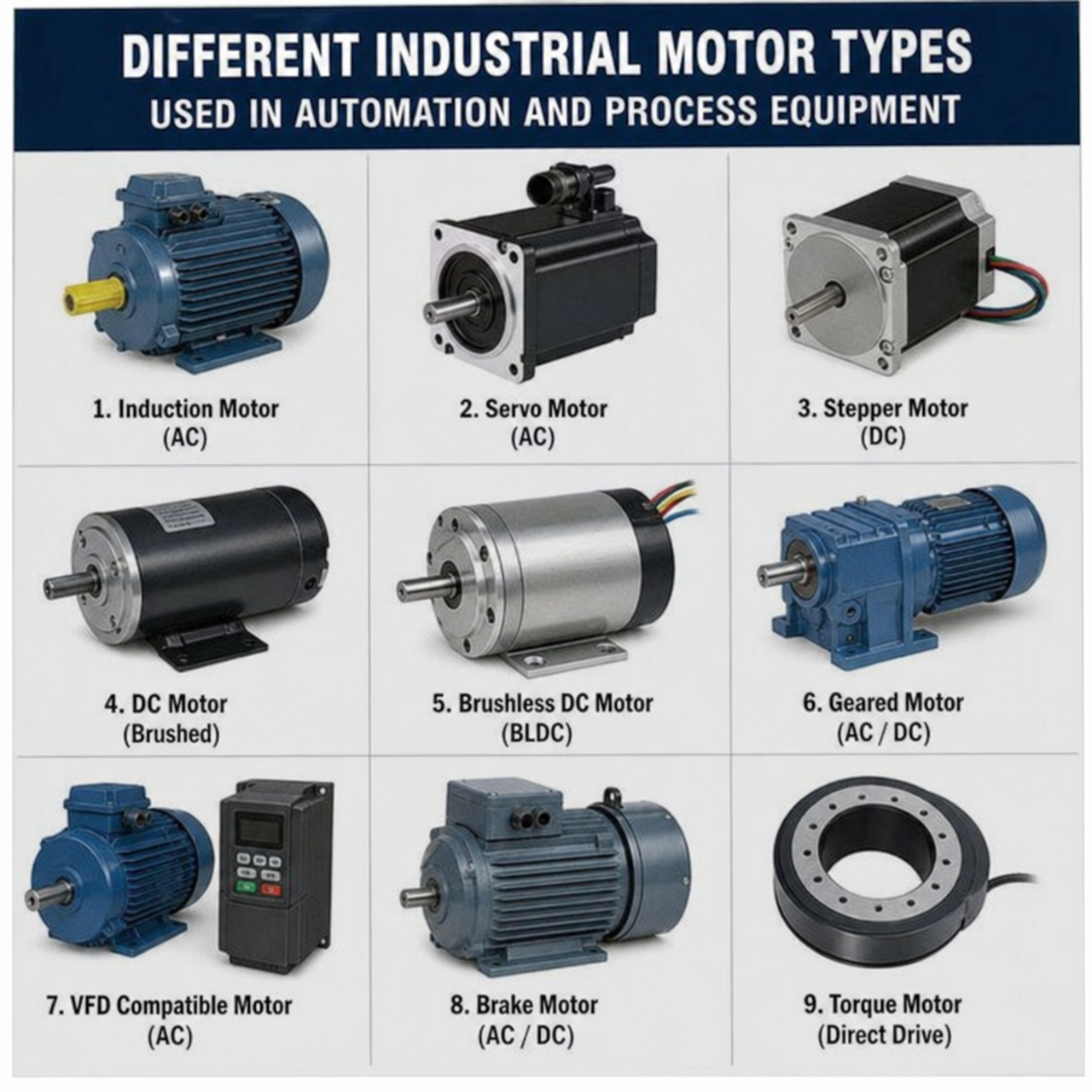
AC induction motors are among the most widely used industrial motors. They are rugged, cost-effective, and well suited for pumps, fans, compressors, conveyors, mixers, and general machinery. When paired with a variable frequency drive, they can provide flexible speed control for many process applications.
Synchronous Motors
Synchronous motors operate at a speed synchronized with the electrical supply frequency. They are often used in larger, high-power applications where constant speed, high efficiency, or power factor correction may be important. Typical uses include compressors, large pumps, mills, and heavy industrial drives.
DC Motors
DC motors are used where adjustable speed and strong starting torque are required. Although AC drives have replaced DC systems in many modern installations, DC motors are still found in cranes, hoists, rolling mills, elevators, and legacy equipment.
Servo Motors
Servo motors are designed for precise control of position, speed, and torque. They are common in robotics, CNC machines, packaging systems, printing equipment, pick-and-place machines, and automated assembly lines. Servo systems typically include feedback devices that allow the controller to make accurate adjustments in real time.
Stepper Motors
Stepper motors move in defined increments, making them useful for positioning applications that require repeatable motion without the complexity of a full servo system. They are commonly used in indexing tables, small automation equipment, labeling systems, inspection devices, and light-duty positioning systems.
Common Driven Loads
Many industrial electric motors applications can be grouped by the type of load the motor drives.
Pumps: Used for water, chemicals, oil, slurry, coolant, and process fluids. Motor selection depends on flow, pressure, fluid properties, duty cycle, and starting conditions.
Fans and blowers: Used for ventilation, combustion air, cooling, dust collection, and drying. These loads often benefit from variable speed control.
Compressors: Used for compressed air, refrigeration, gas processing, and pneumatic systems. Compressors may require high starting torque and careful thermal protection.
Conveyors: Used to move parts, packages, bulk materials, or finished goods. Key considerations include load weight, incline, acceleration, stopping frequency, and gearbox selection.
Mixers and agitators: Used in chemical, food, wastewater, and pharmaceutical processes. These applications may involve variable viscosity, shock loading, or continuous-duty operation.
Machine tools and automation equipment: Used for cutting, drilling, positioning, feeding, and indexing. Precision, response time, and control compatibility are especially important.
Key Factors When Selecting an Industrial Electric Motor
Choosing the right motor requires more than matching horsepower. A good specification considers the full operating environment and mechanical load.
Important selection factors include:
- Power and torque requirements: The motor must provide enough torque during startup, acceleration, and normal operation.
- Speed range: Some applications need fixed speed, while others require variable speed control.
- Duty cycle: Continuous operation, frequent starts, reversing, and intermittent loading all affect motor design.
- Voltage and power supply: The motor must match the facility’s electrical system and control equipment.
- Enclosure and environment: Dust, moisture, chemicals, washdown, vibration, and temperature can influence enclosure choice.
- Mounting and frame size: The motor must physically fit the equipment and align properly with couplings, belts, or gearboxes.
- Efficiency goals: Higher-efficiency motors can reduce operating costs, especially in applications with long run hours.
- Control method: Direct-on-line starting, soft starters, and variable frequency drives all place different demands on the motor.
- Safety and compliance needs: Hazardous locations, food-grade areas, and regulated processes may require specific certifications or construction features.
NEMA and IEC Standards
Industrial motors are commonly specified according to NEMA or IEC conventions. NEMA standards are widely used in North America, while IEC standards are common in many international markets. These standards help define important characteristics such as frame dimensions, mounting arrangements, performance expectations, enclosure types, and efficiency classifications.
When replacing a motor, matching the relevant standard can simplify installation and reduce the risk of mechanical or electrical incompatibility. However, NEMA and IEC motors are not always directly interchangeable. Frame dimensions, shaft sizes, mounting details, and performance ratings may differ, so specifications should be reviewed carefully before substitution.
Efficiency and Lifecycle Cost Considerations
The purchase price of a motor is only one part of its total cost. In many industrial facilities, energy consumption represents the largest long-term expense, especially for motors that run continuously.
To improve efficiency, facilities may:
- Select properly sized motors instead of oversizing by default.
- Use premium-efficiency designs where justified by operating hours.
- Add variable frequency drives to pumps, fans, and blowers with changing demand.
- Maintain correct belt tension and coupling alignment.
- Keep cooling passages clean to prevent overheating.
- Monitor power draw, vibration, and temperature to identify developing problems.
Efficient motor systems also depend on the driven equipment. A high-efficiency motor connected to a worn pump, misaligned gearbox, or poorly designed duct system may still waste energy.
Maintenance Best Practices
Reliable motor operation depends on consistent maintenance. While requirements vary by motor type and application, common best practices include:
- Inspecting bearings for noise, heat, or vibration.
- Checking insulation condition and winding resistance as appropriate.
- Keeping motors clean and properly ventilated.
- Verifying alignment between the motor and driven equipment.
- Lubricating bearings according to manufacturer guidance.
- Monitoring vibration trends to detect imbalance or mechanical wear.
- Checking electrical connections for looseness, corrosion, or overheating.
- Reviewing drive parameters when motors are controlled by variable frequency drives.
Predictive maintenance tools such as vibration analysis, thermal imaging, and motor current signature analysis can help identify problems before they cause unplanned downtime.
Practical Examples of Motor Selection
A centrifugal pump in a water plant may use an AC induction motor with a variable frequency drive so flow can be adjusted based on demand.
A robotic packaging line may use servo motors because accurate positioning and repeatable motion are more important than simple rotation.
A mine conveyor may require a rugged motor with high starting torque, strong bearings, and protection against dust and vibration.
A cooling tower fan may use a motor designed for outdoor exposure, moisture, and variable speed operation.
A legacy crane system may still use a DC motor where strong torque and speed control are required, although modernization may involve an AC motor and drive package.
Final Thoughts
Industrial electric motors are used wherever industry needs controlled motion, fluid movement, compression, ventilation, lifting, mixing, or precision positioning. The best motor choice depends on the application, load profile, environment, standards, efficiency targets, and maintenance strategy.
By understanding where motors are used and how different motor types perform, facility teams can make better purchasing and maintenance decisions. Whether the need is for pumps, fans, compressors, conveyors, robotics, or heavy process equipment, selecting high-quality electric motors for industrial applications helps support uptime, energy performance, and long-term reliability.


