


Industrial Motor: Definition, Working Principle and Core Mechanism
An industrial motor is a machine designed to convert electrical energy into mechanical motion for demanding production, processing, and infrastructure environments. In practical terms, it is the power source behind equipment such as conveyors, pumps, compressors, fans, mixers, crushers, extruders, elevators, and machine tools.
Unlike small household motors, industrial motors are built for higher workloads, longer duty cycles, tougher operating conditions, and more precise integration with automated systems. They may run continuously for long shifts, handle heavy starting loads, or operate under variable speed requirements depending on the application.
Understanding the industrial motor working principle is essential for engineers, maintenance teams, plant managers, and anyone involved in machinery selection. A motor is not just a rotating device; it is part of a larger power and control ecosystem that includes electrical supply, mechanical load, protection devices, sensors, drives, and motor control systems.
What Is an Industrial Motor?
An industrial motor is an electromechanical device used to produce rotational or linear motion for industrial equipment. Most industrial motors create rotary motion through electromagnetic interaction between stationary and moving components. That rotation is then transferred to machinery through shafts, couplings, belts, pulleys, gears, or direct-drive connections.
The main purpose of an industrial motor is to deliver controlled mechanical power. Depending on the application, that power may need to be constant, adjustable, highly efficient, fast-starting, reversible, or capable of handling frequent stop-and-start cycles.
Industrial motors are commonly used in sectors such as:
- Manufacturing and assembly
- Oil and gas
- Mining and material handling
- Food and beverage processing
- Chemical and pharmaceutical production
- Water and wastewater treatment
- HVAC and building systems
- Power generation
- Packaging and logistics
- Metal, paper, textile, and plastics processing
In each environment, the motor must match the mechanical load, electrical supply, operating conditions, and safety requirements of the system.
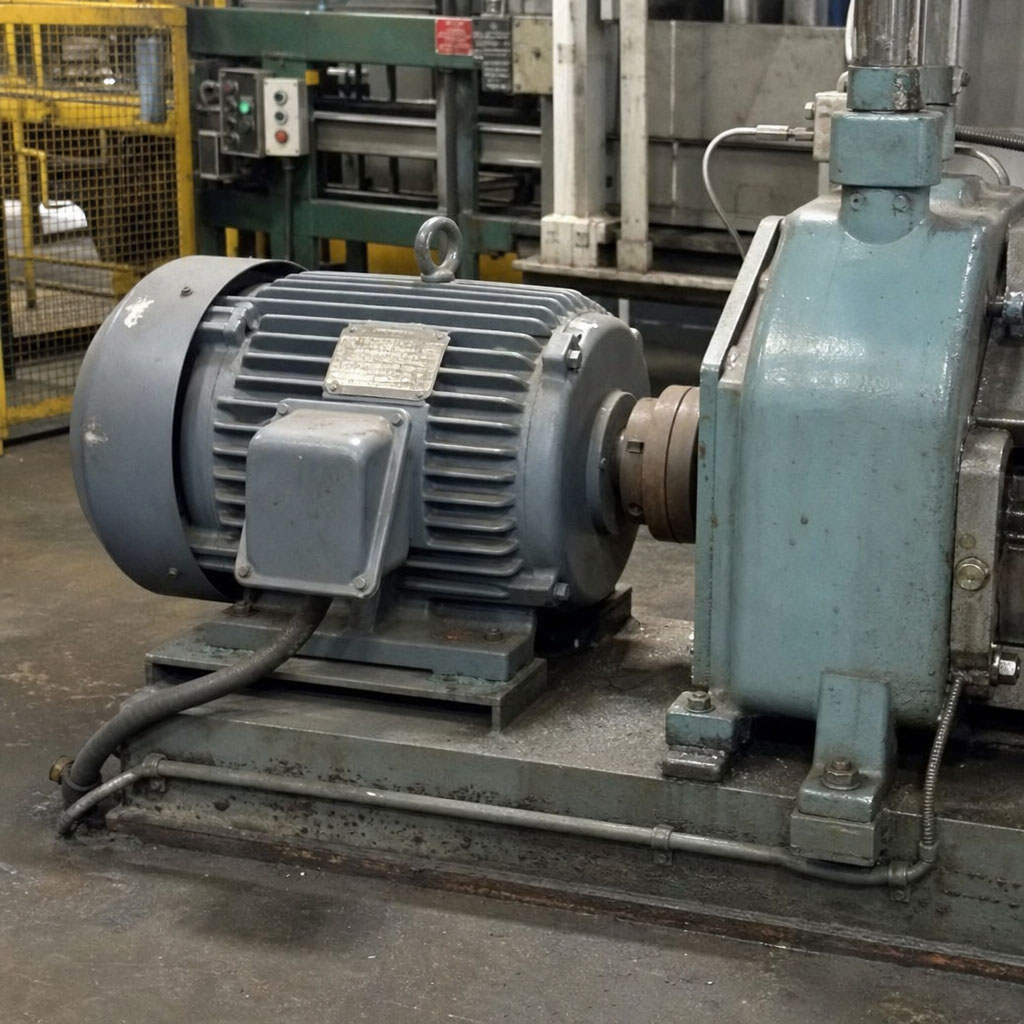
Basic Industrial Motor Working Principle
The core industrial motor working principle is based on electromagnetism. When electric current flows through a conductor inside a magnetic field, it produces force. In a motor, this force is arranged in a way that creates torque, which turns the motor shaft.
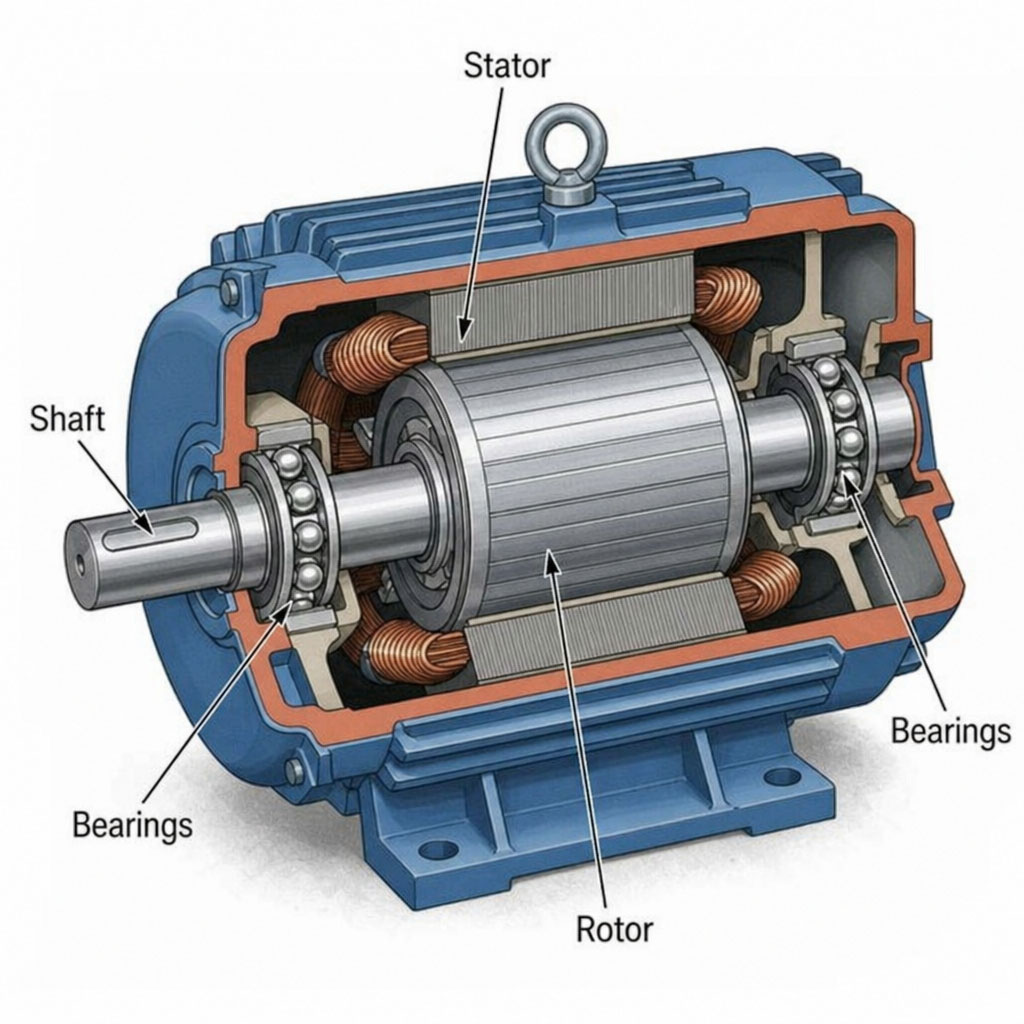
In most industrial motors, the stationary part is called the stator, and the rotating part is called the rotor. The stator produces a magnetic field. The rotor reacts to that magnetic field and begins to rotate. This rotation is then used to drive mechanical equipment.
A simplified version of the process looks like this:
1. Electrical power enters the motor.
2. Current flows through windings or conductive paths.
3. A magnetic field is generated inside the motor.
4. The magnetic field interacts with the rotor.
5. Electromagnetic force creates torque.
6. The rotor turns the shaft.
7. The shaft transfers mechanical energy to the connected machine.
The exact behavior depends on the motor design. For example, an AC induction motor works differently from a DC motor or servo motor, but the underlying idea remains the conversion of electrical energy into controlled motion.
Core Components of an Industrial Motor
Although industrial motor designs vary, many include several common components.
Stator
The stator is the fixed outer section of the motor. It usually contains laminated steel cores and electrical windings. When energized, the stator creates the magnetic field required for motor operation.
In AC motors, the stator often produces a rotating magnetic field. This rotating field is what causes the rotor to turn.
Rotor
The rotor is the rotating internal part of the motor. It is connected to the shaft and moves in response to electromagnetic forces. Rotor designs vary by motor type. Some use conductive bars, some use windings, and others use permanent magnets.
The rotor’s design affects torque, speed, efficiency, and response time.
Shaft
The shaft transfers rotational motion from the rotor to the external machine. It must be strong enough to handle the mechanical load and precisely aligned to reduce vibration, wear, and energy loss.
Bearings
Bearings support the shaft and allow smooth rotation. In industrial environments, bearing condition is critical because bearing failure is one of the most common causes of motor downtime.
Windings
Windings are insulated coils of wire that carry current and create magnetic fields. The arrangement, insulation quality, and cooling of the windings directly affect motor reliability and performance.
Frame or Housing
The motor frame protects internal parts, supports mounting, and helps dissipate heat. Industrial motor housings may be designed for harsh conditions, including dust, moisture, chemicals, vibration, or explosive atmospheres.
Cooling System
Motors generate heat during operation. Cooling may be handled by external fans, internal airflow, liquid cooling, or ventilation through the frame. Proper heat management helps protect insulation, bearings, and overall motor life.
The Core Mechanism: How Motion Is Created
The core mechanism of an industrial motor depends on the relationship between magnetic fields and current flow. A motor creates controlled imbalance: magnetic forces continuously pull or push the rotor in a rotational direction.
In an AC induction motor, the stator creates a rotating magnetic field. This field induces current in the rotor. The induced current creates its own magnetic field, which interacts with the stator field. The rotor turns as it tries to follow the rotating field.
In a synchronous motor, the rotor turns at the same speed as the rotating magnetic field. This may be achieved through rotor windings or permanent magnets. Synchronous motors are often used where precise speed control or high efficiency is needed.
In a DC motor, current is supplied to the rotor or armature, and magnetic interaction produces torque. Mechanical or electronic commutation changes the current direction at the right moment to keep the rotor spinning.
In servo and stepper motors, the mechanism is designed for controlled positioning rather than only continuous rotation. These motors are often paired with feedback devices and digital controllers.
Key Performance Terms to Know
Understanding industrial motors also requires familiarity with several performance terms.
Torque
Torque is the rotational force produced by the motor. High-torque motors are needed for heavy loads, lifting, crushing, mixing, and startup under load.
Speed
Speed is usually measured in revolutions per minute. Some processes require constant speed, while others need variable speed for flexibility or energy savings.
Horsepower or Kilowatt Rating
Motor power indicates the rate at which the motor can do mechanical work. Selecting the correct power rating is important. An undersized motor may overheat or fail, while an oversized motor may waste energy and increase cost.
Efficiency
Efficiency describes how effectively the motor converts electrical input into mechanical output. Higher-efficiency motors reduce energy losses, which can be significant in facilities with many motors running for long hours.
Duty Cycle
Duty cycle describes how long and how often a motor operates. Some motors run continuously, while others operate intermittently. The duty cycle affects heating, sizing, and expected life.
Enclosure Rating
The enclosure protects the motor from environmental conditions. A motor in a clean indoor facility may need a different enclosure than one exposed to water spray, dust, corrosive materials, or outdoor weather.
An industrial motor is an electromechanical device that powers machinery by converting electricity into motion. Its core mechanism relies on electromagnetic force, where interaction between magnetic fields and current creates torque and turns a shaft.The industrial motor working principle may vary by design, but most motors include a stator, rotor, shaft, bearings, windings, housing, and cooling system.


