


Common Industrial Motor Faults Causes and Troubleshooting Tips
Industrial motors keep production lines, pumps, compressors, conveyors, fans, and processing equipment moving. When a motor fails, the impact is rarely limited to one machine. Downtime can slow output, damage connected equipment, increase energy costs, and create safety risks for maintenance teams.
Understanding Common Industrial Motor Faults, Causes and Troubleshooting Tips helps technicians identify problems earlier and respond with a structured plan instead of guesswork. This guide explains the most frequent failure modes, what usually causes them, how to approach motor fault diagnosis, and practical motor maintenance tips that can reduce unexpected breakdowns.
Why Industrial Motors Fail
Most industrial motor failures develop over time. A motor may continue running while heat, vibration, contamination, electrical imbalance, or mechanical stress slowly damages internal components. By the time the motor trips a breaker, stalls, or stops completely, the root cause may have been present for weeks or months.
Common causes include:
· Poor lubrication or over-lubrication
· Bearing wear
· Excessive vibration
· Electrical overload
· Voltage imbalance
· Contaminants such as dust, moisture, oil, or chemicals
· Misalignment between the motor and driven equipment
· Improper installation
· Inadequate cooling or blocked ventilation
· Aging insulation
· Frequent starts and stops
· Incorrect motor sizing for the application
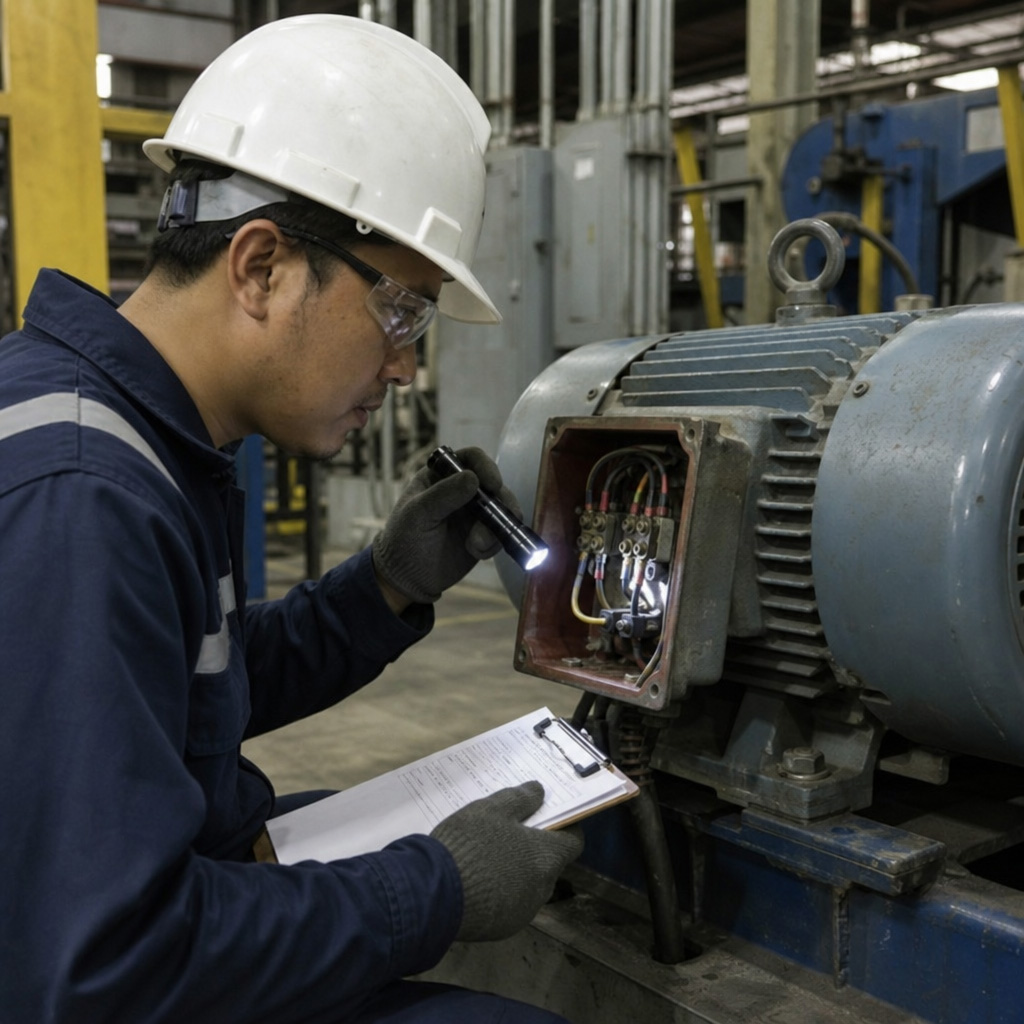
Effective troubleshooting industrial motors starts by separating symptoms from causes. A hot motor, for example, may point to overload, restricted airflow, poor power quality, bearing friction, or a failing winding. The symptom tells you where to look, but testing confirms the fault.
1. Motor Overheating
Overheating is one of the most common motor problems and one of the most damaging. Excessive heat accelerates insulation breakdown, weakens bearings, dries out lubricant, and shortens the useful life of the motor.
Common causes of overheating
A motor may overheat because it is working harder than designed. This can happen when the driven load is jammed, oversized, poorly maintained, or operating outside normal conditions. Electrical issues can also create heat, especially voltage imbalance, low voltage, phase loss, or harmonic distortion.
Cooling problems are another frequent cause. Dirt buildup on cooling fins, blocked fan covers, failed cooling fans, or poor ambient ventilation can prevent heat from escaping.
Troubleshooting tips
Start by checking the load. Confirm that the connected equipment rotates freely and is not binding. Inspect belts, couplings, gearboxes, pumps, fans, and conveyors for excess friction.
Next, measure current draw on each phase and compare it with the motor nameplate rating. If current is high, investigate overload or power supply problems. Check voltage balance across phases and look for loose terminals or damaged conductors.
Also inspect airflow. Clean vents, remove debris, and make sure the motor has enough space around it for cooling. If overheating continues after these checks, schedule deeper testing, including insulation resistance and winding evaluation.
2. Bearing Failure
Bearings support the rotating shaft and allow smooth operation. When bearings fail, the motor may become noisy, vibrate excessively, overheat, or seize.
Common causes of bearing failure
Bearing failure often results from lubrication problems. Too little grease causes metal-to-metal contact, while too much grease can increase friction and force lubricant into areas where it does not belong. Contaminants such as dust, water, and process chemicals can also degrade bearing surfaces.
Other causes include misalignment, excessive belt tension, unbalanced loads, improper installation, shaft currents, and vibration from nearby equipment.
Troubleshooting tips
Listen for grinding, squealing, rumbling, or clicking noises. Use vibration analysis when available to detect early bearing defects. Check bearing temperature and compare it with normal operating trends.
Inspect lubrication practices. Confirm the correct lubricant type, quantity, and interval. Avoid mixing incompatible greases. If the motor uses sealed bearings, note that abnormal noise or heat may require replacement rather than re-lubrication.
During industrial motor repair, always inspect the shaft, housing, seals, and bearing fits. Replacing a bearing without correcting misalignment, contamination, or excessive load can lead to repeat failure.
3. Excessive Vibration
Vibration is both a symptom and a cause of motor damage. Left unresolved, vibration can loosen fasteners, damage bearings, fatigue shafts, crack mounts, and harm connected equipment.
Common causes of vibration
Typical causes include:
· Motor-to-load misalignment
· Unbalanced rotor or driven component
· Worn bearings
· Soft foot condition
· Loose mounting bolts
· Bent shaft
· Resonance in the base or structure
· Damaged coupling or pulley
· Belt tension problems
Troubleshooting tips
Begin with a visual inspection. Look for loose bolts, cracked bases, damaged guards, worn belts, or uneven mounting surfaces. Confirm that the motor sits firmly on its base without rocking.
Check alignment between the motor shaft and driven equipment. Even small misalignment can create significant vibration at operating speed. If vibration appeared after maintenance, review recent coupling, belt, pulley, or bearing work.
Where possible, use vibration monitoring tools to identify frequency patterns. These patterns can help distinguish imbalance, misalignment, bearing defects, and looseness.
4. Motor Fails to Start
A motor that will not start can create immediate production disruption. The fault may be electrical, mechanical, or control-related.
Common causes
Possible causes include a blown fuse, tripped overload, open circuit, failed contactor, defective starter, incorrect control signal, phase loss, locked rotor, seized bearing, or jammed driven equipment. In some cases, the motor may hum but fail to turn, suggesting insufficient starting torque, capacitor failure in applicable motor types, or a mechanical blockage.
Troubleshooting tips
Follow lockout/tagout procedures before inspection. Check the incoming power supply, fuses, breakers, overload relays, and control circuit. Verify that start commands are reaching the starter or drive.
Try rotating the shaft manually only when it is safe and de-energized. If it does not turn freely, disconnect the driven equipment to determine whether the motor or the load is locked.
If the shaft rotates freely and power is present, inspect the starter, contactor, overload settings, wiring, and motor windings. For motors controlled by a variable frequency drive, review fault codes and parameter settings.
5. Motor Trips Overload or Breaker
Repeated tripping is a warning sign that should not be ignored. Resetting the overload without investigating the cause can lead to serious equipment damage.
Common causes
A motor may trip because of overload, phase imbalance, short circuits, ground faults, incorrect overload settings, high ambient temperature, frequent starts, blocked cooling, or mechanical drag from the connected machine.
Troubleshooting tips
Record when the trip occurs. Does it happen at startup, under load, after running for a period of time, or randomly? Startup trips may indicate locked rotor conditions, insufficient supply capacity, incorrect starter settings, or mechanical binding. Trips after several minutes often point to heat buildup, overload, or ventilation issues.
Measure phase current during operation. Current significantly above nameplate rating suggests overload or electrical trouble. Compare all three phases. Uneven current may indicate voltage imbalance, winding issues, or connection problems.
Do not oversize protective devices to stop nuisance trips. Protection settings exist to prevent motor damage and fire hazards. Correct the root cause instead.
6. Insulation Breakdown and Winding Faults
Motor windings rely on insulation to separate conductors and prevent short circuits. Over time, heat, moisture, contamination, vibration, and electrical stress can degrade insulation.
Common warning signs
Signs of winding problems may include burning odor, discoloration, repeated trips, low insulation resistance readings, ground faults, phase-to-phase imbalance, or reduced motor performance.
Troubleshooting tips
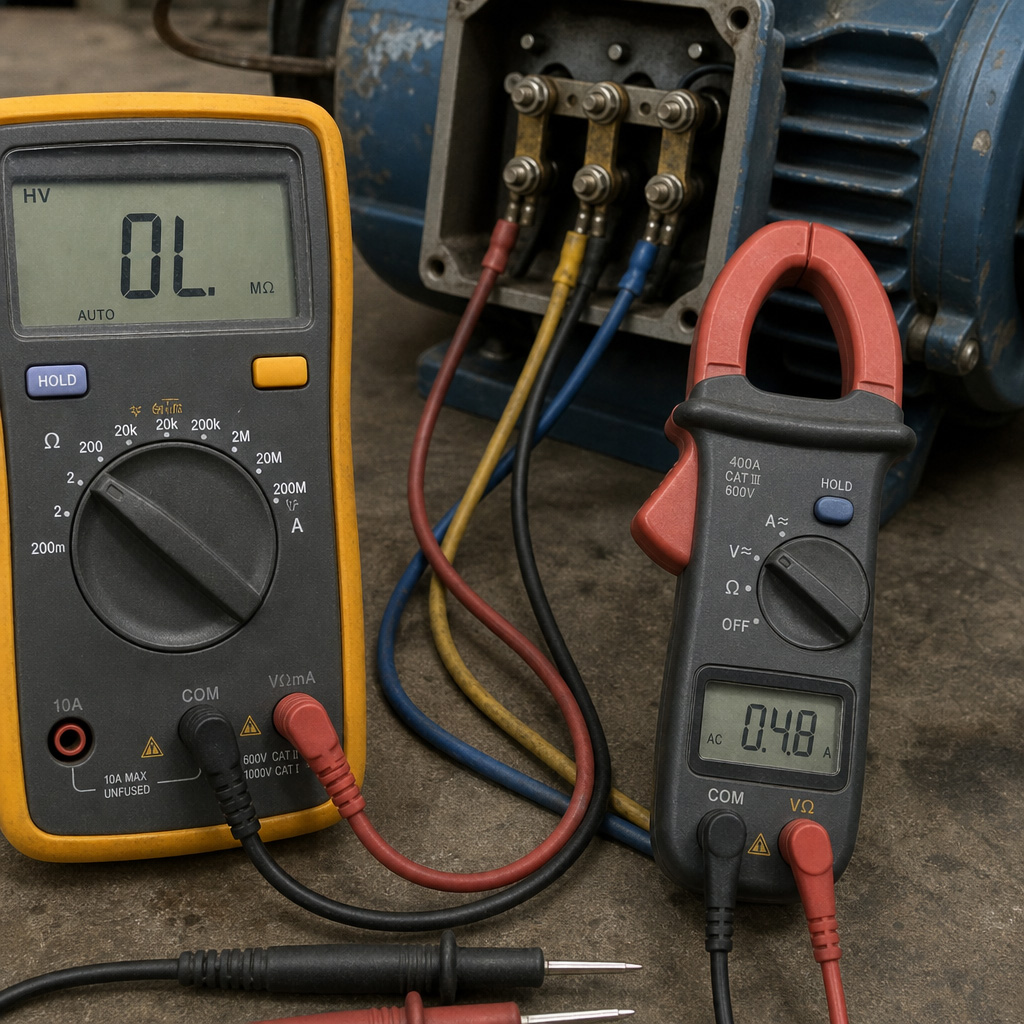
Use appropriate electrical test equipment to evaluate insulation resistance and winding condition. Compare readings with maintenance history and accepted site standards. If moisture is suspected, inspect storage conditions, conduit seals, terminal boxes, and washdown exposure.
Winding faults often require specialized industrial motor repair. Depending on motor size, age, application criticality, and repair cost, the best option may be repair, rewind, or replacement.
7. Poor Power Quality
Electrical supply issues can damage motors even when the mechanical system is healthy. Poor power quality is especially important in facilities with large drives, welders, compressors, or fluctuating loads.
Common power-related problems
Industrial motors may be affected by:
· Voltage imbalance
· Low voltage
· Overvoltage
· Phase loss
· Harmonics
· Transients and surges
· Loose or corroded connections
Troubleshooting tips
Measure voltage at the motor terminals while the motor is running under load. Testing only at the panel may miss voltage drop or connection issues closer to the motor.
Inspect terminals for heat damage, discoloration, looseness, and corrosion. Review whether problems occur when other large equipment starts. If variable frequency drives are involved, check grounding, cable length, shielding, and drive settings.
8. Contamination and Environmental Damage
Industrial environments can be harsh. Dust, fibers, metal particles, moisture, oil, and chemicals can enter motors and cause electrical or mechanical failure.
Common causes
Motors may be installed in areas with washdown procedures, high humidity, abrasive dust, corrosive vapors, or poor housekeeping. Incorrect enclosure selection can make the motor vulnerable to the operating environment.
Troubleshooting tips
Inspect the motor exterior, fan cover, terminal box, seals, and drain paths. Look for signs of rust, residue, dust buildup, or liquid entry. Confirm that the motor enclosure is suitable for the environment.
Cleaning should be performed carefully. Avoid forcing contaminants deeper into the motor. For severe contamination, professional inspection may be needed.
Practical Motor Maintenance Tips
Preventive maintenance is the best way to reduce unplanned downtime. A strong program does not need to be complicated, but it should be consistent.
Useful motor maintenance tips include:
· Keep motors clean and properly ventilated
· Inspect mounting bolts, bases, belts, pulleys, and couplings regularly
· Lubricate bearings according to manufacturer guidance and site procedures
· Track operating temperature, current, and vibration trends
· Listen for unusual noise during routine rounds
· Check for signs of overheating at terminals and connections
· Maintain accurate records of failures, repairs, and test results
· Confirm alignment after installation, repair, or equipment movement
· Protect motors from moisture and contaminants during operation and storage
· Investigate repeated trips instead of repeatedly resetting devices
Trend data is especially valuable. A single temperature or vibration reading may not reveal much, but gradual changes over time often show developing problems before failure occurs.
A Step-by-Step Approach to Troubleshooting Industrial Motors
When troubleshooting, use a structured process:
1. Identify the symptom. Note whether the motor is hot, noisy, vibrating, tripping, failing to start, or underperforming.
2. Review recent changes. Ask whether maintenance, process changes, load changes, or electrical work occurred recently.
3. Inspect visually. Look for obvious damage, contamination, loose parts, blocked ventilation, leaks, or burnt components.
4. Check the mechanical load. Confirm that the driven equipment moves freely and is not overloaded.
5. Measure electrical values. Test voltage, current, phase balance, and control signals.
6. Compare with nameplate data. Verify current, voltage, speed, duty, and service conditions.
7. Use condition monitoring tools. Apply vibration analysis, thermal imaging, insulation testing, or oil/grease inspection when available.
8. Correct the root cause. Replace failed parts only after identifying what caused the failure.
9. Document the repair. Record findings so future troubleshooting is faster and more accurate.
When to Repair, Rewind, or Replace a Motor
Not every motor fault requires replacement. Minor problems such as loose connections, blocked cooling passages, misalignment, or lubrication issues may be corrected quickly. More serious faults, such as damaged windings, severe bearing housing wear, cracked shafts, or repeated insulation failure, may require professional evaluation.
Consider repair or replacement based on:
· Motor size and replacement availability
· Cost of downtime
· Energy efficiency goals
· Age and repair history
· Criticality of the application
· Extent of mechanical and electrical damage
· Availability of spare motors
For critical equipment, it may be wise to keep a spare motor or establish a relationship with a qualified repair provider before an emergency occurs.
Final Thoughts
The most effective approach to common motor problems is early detection, accurate diagnosis, and disciplined maintenance. Heat, vibration, bearing wear, contamination, power issues, and overload are among the most frequent causes of industrial motor failure, but they can often be managed with routine inspections and reliable testing.
By following practical Causes and Troubleshooting Tips, maintenance teams can improve uptime, extend motor life, and make better decisions about repair or replacement. Whether you handle routine inspections in-house or rely on specialists for complex motor fault diagnosis, a systematic approach helps keep industrial operations running safely and efficiently.


